
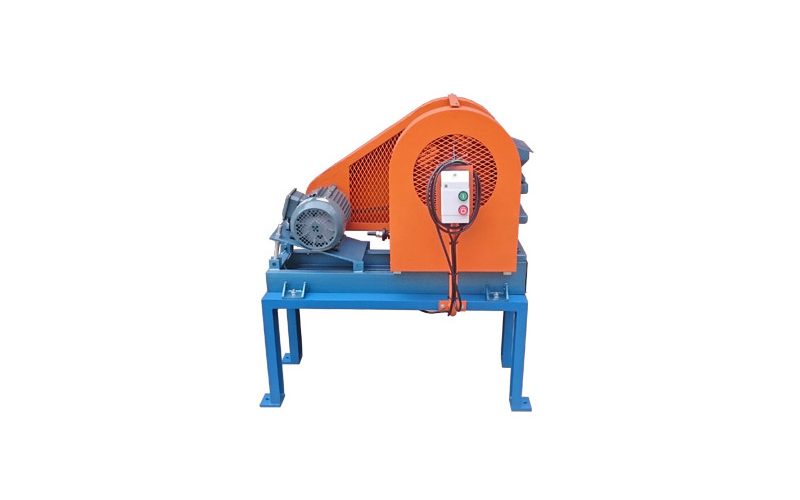
If you’re specifying a lab jaw crusher in South Africa, you’ve probably already noticed the search results are dominated by global manufacturers selling machines that take months to land and longer to get spares for.
RSE Projects has been manufacturing jaw crushers from Johannesburg for over three decades, and this guide covers what actually matters when you’re choosing one: feed size, output size, jaw plate wear, throughput, and the practical difference between buying local and importing.
The Model Range: From Bench-Top to Pilot Plant
RSE Projects builds four jaw crusher sizes: PE 60 x 100, PE 100 x 150, PE 150 x 250 and PE 250 x 400.
At the small end, the PE 60 x 100 (2,5″ x 4″) accepts a feed size of around 35mm and crushes it down to less than 5mm, handling up to 500kg an hour, which suits bench-top lab work on gold, platinum, iron ore, manganese, copper and coal samples.
At the large end, the PE 250 x 400 (10″ x 16″) takes feed up to 200mm and crushes it to less than 25mm at much higher volumes, which is where pilot plant and semi-production work sits.
The two models in between step through that range, so most labs will find a size that matches their sample volumes without over- or under-specifying.
Choosing on Feed Size and Required Output Size
The two numbers that actually decide which crusher you need are the size of material going in and the size you need coming out. Jaw crushers are always at the front of the sample preparation equipment chain, pre-crushing hard, brittle material before it goes to milling or splitting, so under sizing the crusher just pushes the bottleneck downstream.
If your samples arrive as fist-sized lumps of ore or rock, you need a machine with a large enough gape to take that feed; if you’re only ever crushing smaller drill core or pre-broken material, a smaller model with a tighter output setting will get you to your target size faster and with less wear. Get this wrong in either direction and you either choke the hopper or waste capacity you never needed.
Jaw Plate Materials and Wear Life
The jaw plates are the part that actually wears, and what they’re made of matters more for some ores than others. Standard manganese steel jaw plates handle most lab and pilot plant work well and are the usual choice for gold, iron ore and coal samples.
Chrome ore is harder and more abrasive than most material a lab crusher sees, so a chrome crusher setup typically needs a harder wear plate and more frequent gap checks to hold its output size, or wear life drops off fast. South Africa produces a significant share of the world’s chromium, and it’s worth specifying jaw plate hardness against your actual ore rather than assuming a standard plate will last as long on chrome as it does on softer material.
Throughput: Lab Bench Testing vs Pilot Plant Production
A lab running periodic assay samples through a PE 60 x 100 at up to 500kg an hour is solving a completely different problem to a pilot plant running continuous feed through a PE 250 x 400.
If your volumes are occasional and your samples are small, a bench-top model keeps footprint, power draw and cost down. If you’re running a semi-production or pilot circuit, undersizing the crusher creates a queue in front of it, and the rest of your sample preparation line, from crushing through to rod and ball milling, ends up waiting on the crusher rather than the other way round.
Dust and Noise: What South African Sites Need to Plan For
Crushing dry, brittle material generates dust and noise, and if your crusher sits on a mine site rather than a standalone lab, that puts you inside the scope of the Mine Health and Safety Act.
Equipment noise is capped under the Act, and the noise exposure limits set out for South African mining operations mean crusher housings, extraction points and operator positioning are worth planning before installation, not after a compliance walk-through flags them. Dust extraction at the feed and discharge points also protects the sample itself, since airborne fines lost during crushing are fines you don’t get to test.
Why a Locally Manufactured Jaw Crusher Beats an Import
This is where the decision usually comes down to more than the machine itself. An imported jaw crusher can take months to arrive, and when a jaw plate or bearing wears out, you’re waiting on international freight for a part that might have shipped locally in days.
RSE Projects manufactures its crushers from Johannesburg, holds spare parts locally, and offers on-site or workshop service and repair rather than talking a contractor through a fix over email.
For a mine or lab in South Africa’s mining industry, where downtime on a crusher stalls every test that depends on it, lead time and spares availability are as much a part of the buying decision as the spec sheet.
Model Range at a Glance
| Model | Feed Size | Output Size | Typical Use |
| PE 60 x 100 (2,5″ x 4″) | Up to 35mm | Less than 5mm | Bench-top lab work, occasional samples, up to 500kg/hr |
| PE 100 x 150 / PE 150 x 250 | Mid-range, confirm exact specs with RSE | Mid-range, confirm exact specs with RSE | Stepped capacity between bench-top and pilot scale |
| PE 250 x 400 (10″ x 16″) | Up to 200mm | Less than 25mm | Pilot plant and semi-production, large volumes |
Not sure which model fits your feed size and volumes? RSE Projects can help you specify the right crusher and talk you through jaw plate options for your ore type.


