
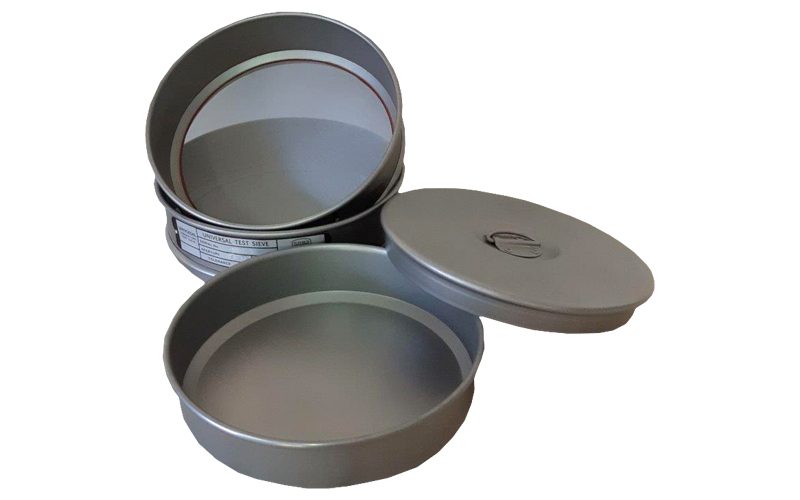
When it comes to choosing test sieves and sieve shakers for your laboratory, the most important aspects to look at are your test method, sample material, and required particle size range. Sieve shakers are used in laboratory testing, quality control, and production monitoring across multiple industries. Therefore, it is vital for laboratories that are responsible for evaluating these samples to adhere to strict standards and methods in order to ensure consistent, quality results.
RSE Projects Test Sieves and Sieve Shakers enable our clients to prepare the necessary materials for sample preparation while also attaining desired material sample sizes for testing.
Test Sieves and Sieve Shakers: Mesh Aperture Sizes, Materials and Dimensions
RSE Projects offers a wide range of test sieves that can be used to grade product material into different size fractions required for particle size analysis. All of our test sieves are manufactured and certified under the South African Bureau of Standards (SABS).
When selecting a lab sieve shaker and test sieves, it’s important that you choose appropriate equipment based on your testing needs, rather than simply relying on generic specifications. In order to conduct tests that are both efficient and accurate, one must first consider the material characteristics, target particle size, applicable standards, and test volume.
Test Sieve Material & Sizing:
- Stainless Steel Mesh Aperture (25 – 850 micron)
- Stainless Steel Wire Mesh Aperture (1,00 – 19,00 mm)
- SHPP Electroplated Steel (3,50 – 150,00 mm)
Test Sieve Diameters:
- 200mm
- 300mm
- 450mm
Electroplated steel test sieves are typically used for coarse particle sizing, aggregates, and construction materials where high strength and cost-effectiveness take priority. Electroplated steel is generally less resistant to corrosion, moisture and harsh chemicals when compared to stainless steel. Hence, if you’re working with abrasive materials, using stainless steel test sieves is a great choice as it holds mesh opening tolerances longer than softer materials while reducing sample contamination.
We also offer specialised test sieves on request.
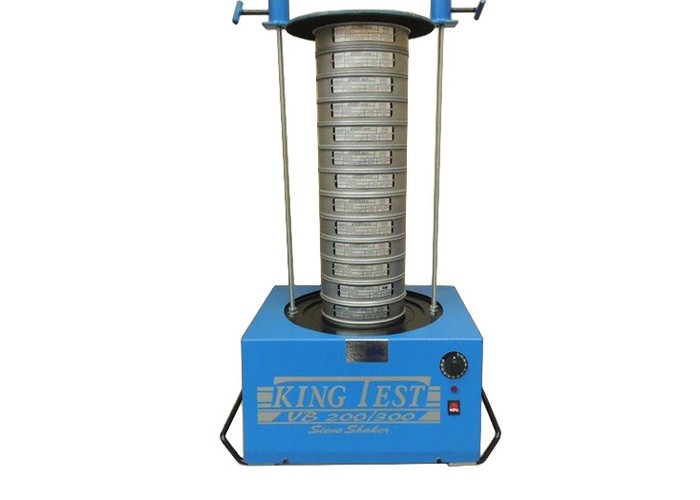
Shaker vs Hand-Sieving
Hand-sieving requires minimal upfront equipment cost and can be used anywhere in the field. However, with hand-sieving, results may vary depending on the operator’s technique, grip, and fatigue. Additionally, one can typically handle one sieve at a time due to weight and handling limits, which makes it a lot more time- and labour-intensive.
Sieve shakers require a larger capital investment, a power source, and take up more lab space. Despite this, sieve shakers utilise controlled motion, amplitude, and timers, ensuring that results remain consistent across operators and shifts. Generally, a shaker can hold a stack of multiple test sieves to separate fractions simultaneously, improving efficiency.
Hand-sieving is usually fine when high precision is not critical, such as quick field checks, spot-checking for contaminants, low-volume testing, or rough separations. A sieve shaker works best for routine quality control, strict compliance, or fine multi-fraction grading.
At RSE Projects, our equipment is specifically designed and produced to ensure accuracy and efficiency in the workplace. We are not only dedicated to supplying our clients with a reliable product, but also to providing ongoing support with our backup services and available spare parts.
Contact us today for more information on our sieve shakers and sieve testers.


